

In times gone by, amidst widespread poverty, the Flour Mills realized that some women were using sacks to make clothes for their children. In response, the Flour Mills started using flowered fabric…
With the introduction of this new cloth into the home, thrifty women everywhere began to reuse the cloth for a variety of home uses – dish towels, diapers, and more. The bags began to become very popular for clothing items.
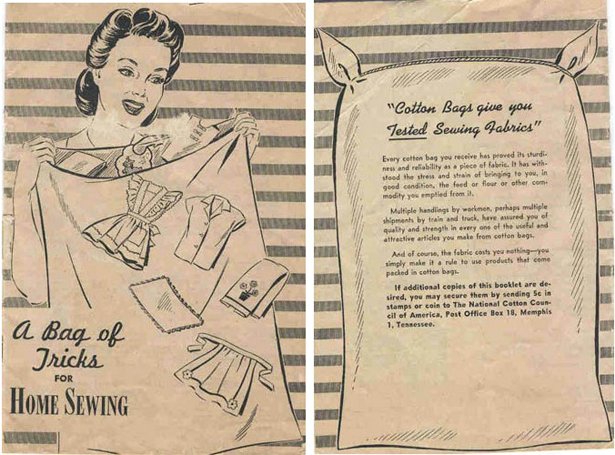
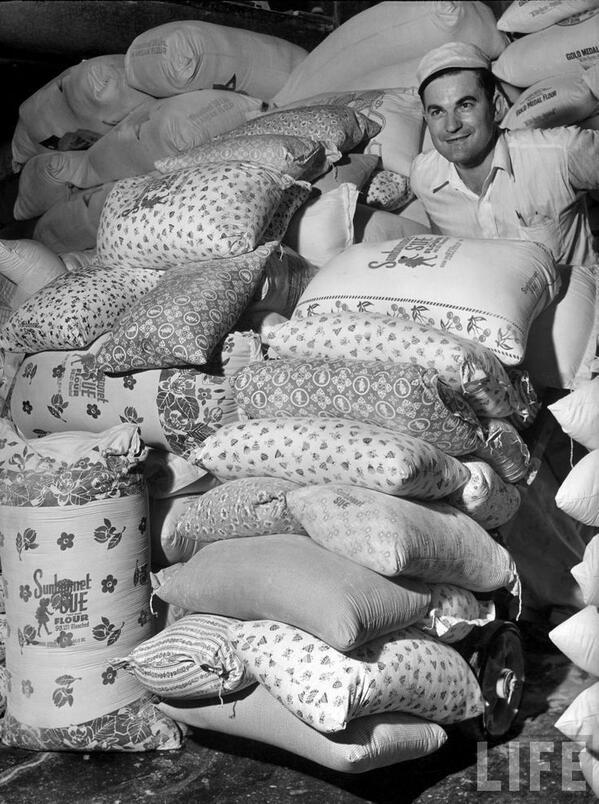 As the recycling trend looked like it was going to stay, the manufacturers began to print their cloth bags – or feedsacks – in an ever wider variety of patterns and colors.
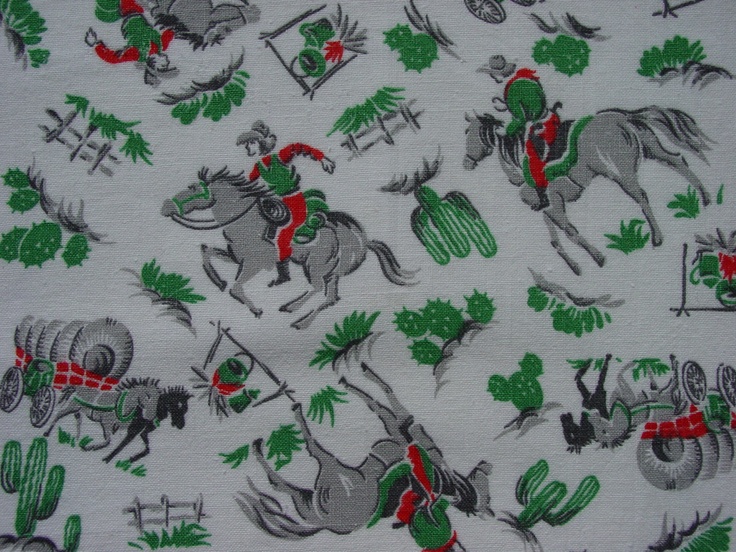
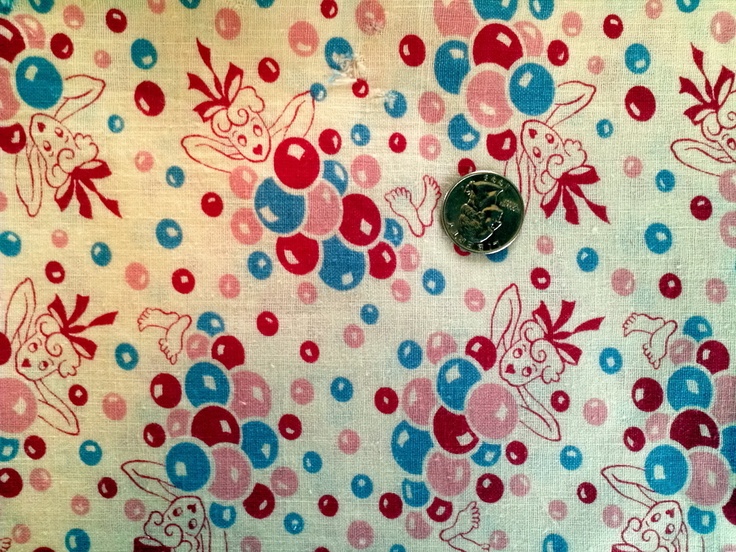
Some of the patterns they started using are shown below
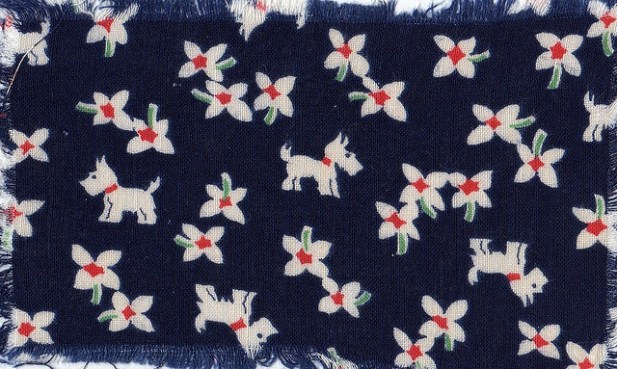
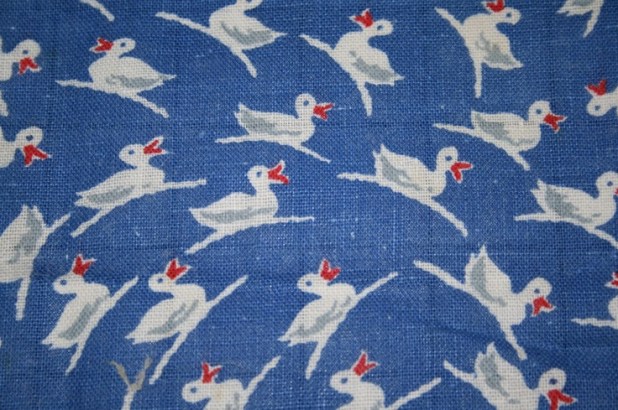
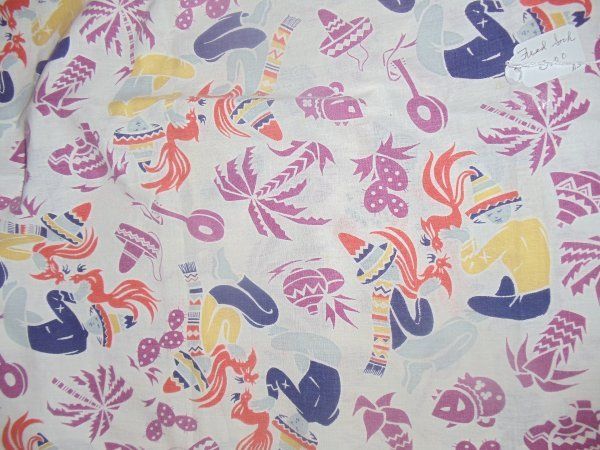 Over time, the popularity of the feedsack as clothing fabric increased beyond anyone’s wildest expectations, fueled by both ingenuity and scarcity.
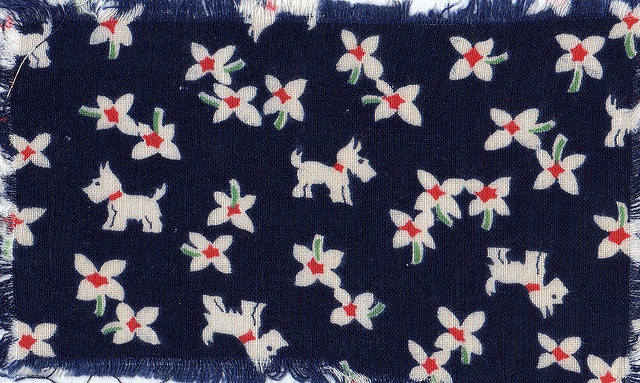
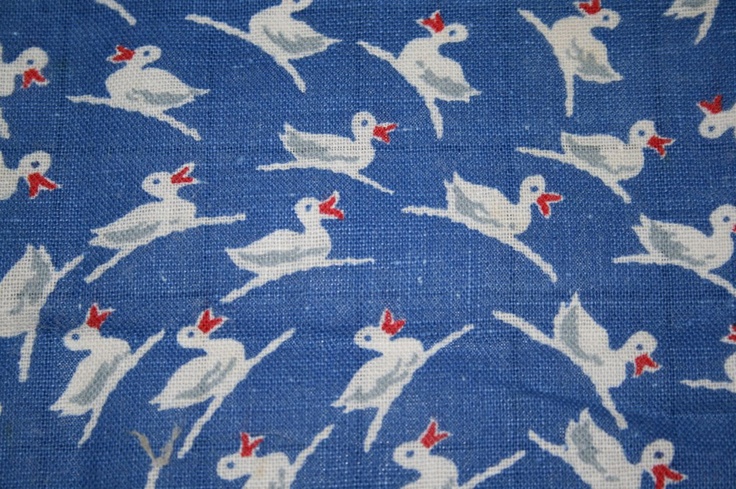
By the time WWII dominated the lives of Americans, and cloth for fabric was in short supply due to its use in the construction of uniforms, it was estimated that over three and a half million women and children were wearing garments created from feedsacks.
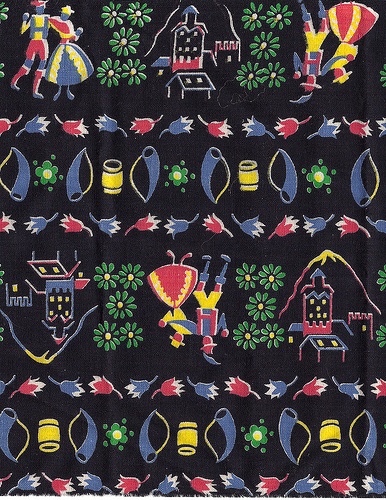 Images like these help to remind us that large swaths of the country were once so poor that making clothes for children, out of flour sacks, was simply a part of life in those times.
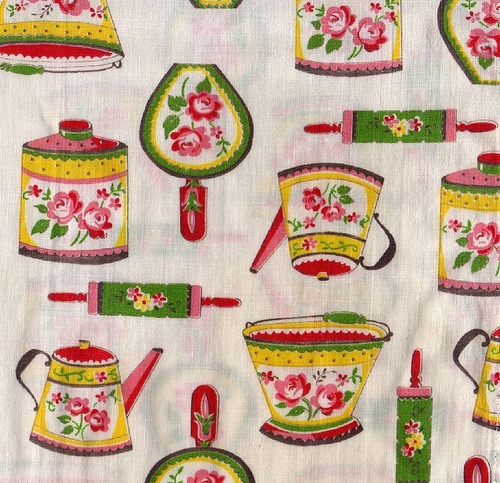
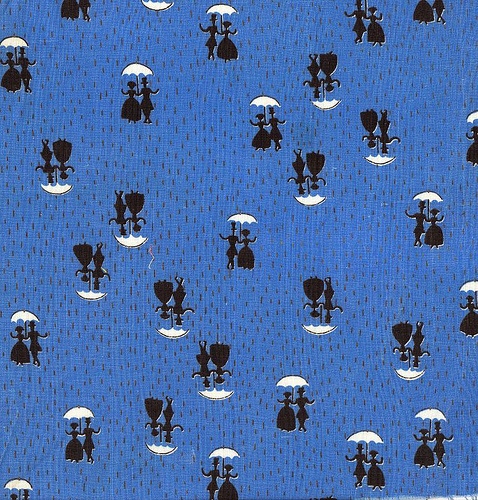
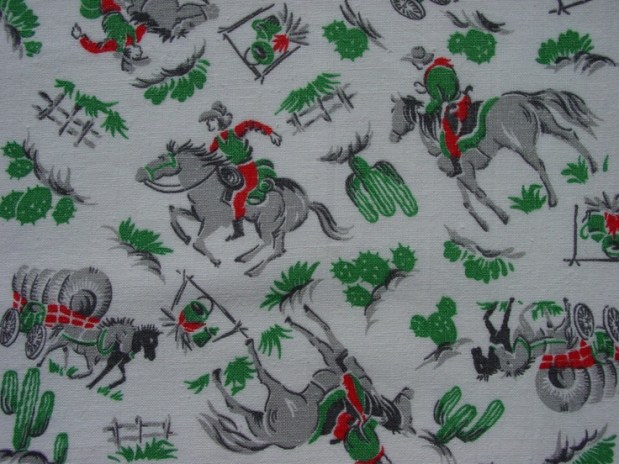
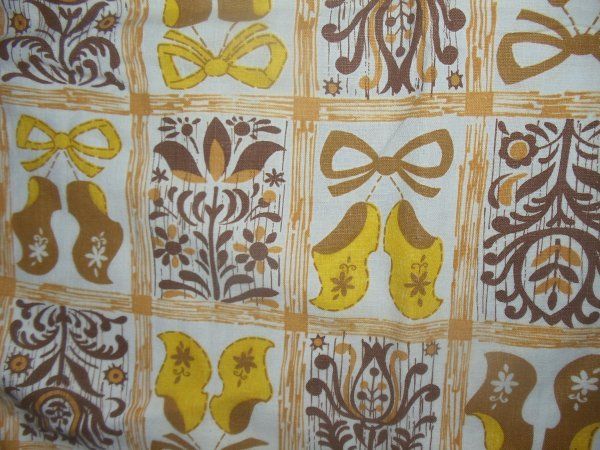
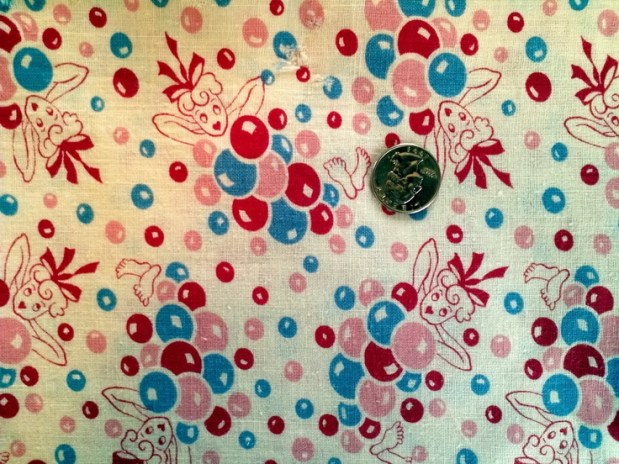
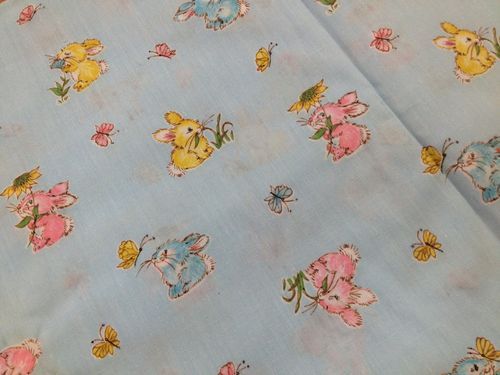
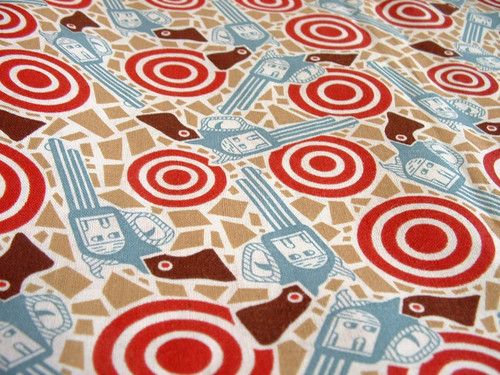
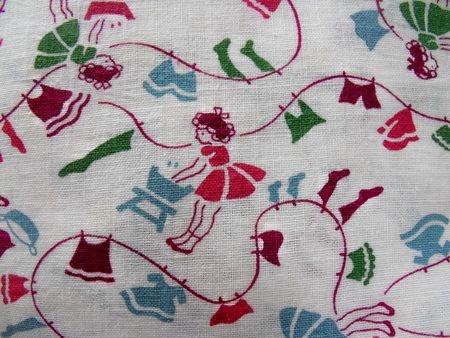
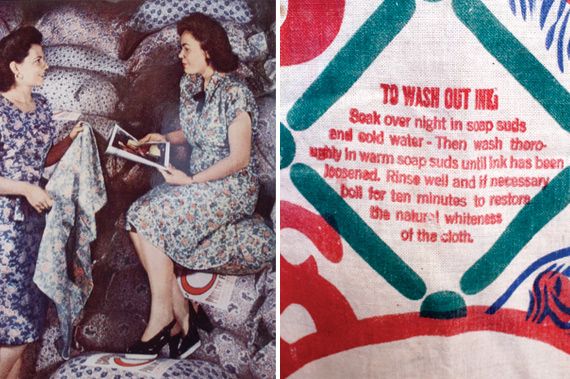
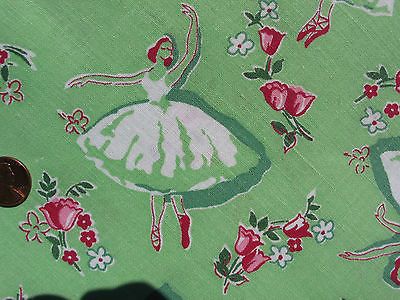 The manufacturers even gave instructions for how to remove the ink…
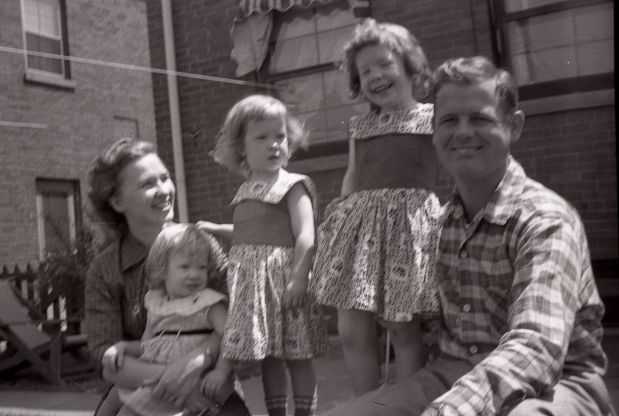
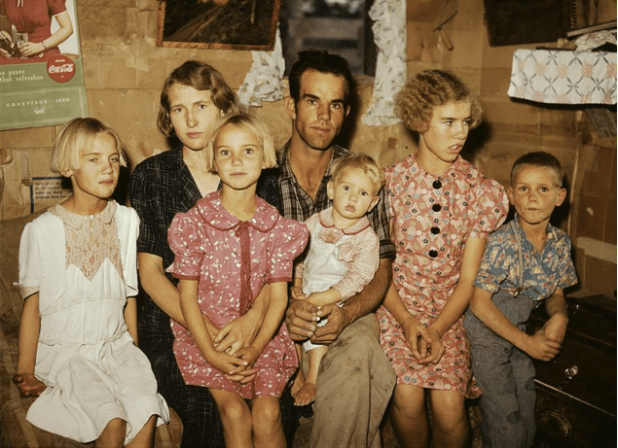
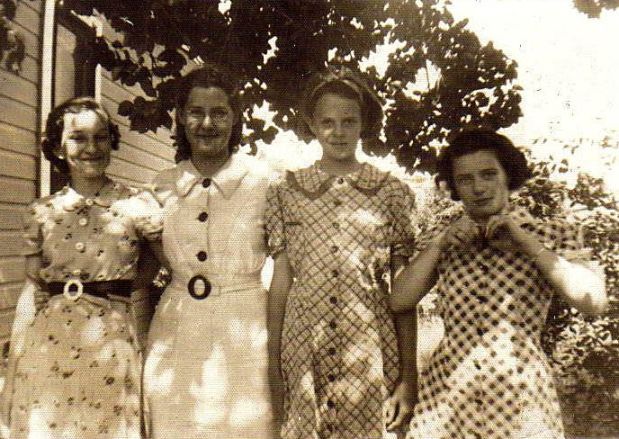
 Families shown below with their children wearing the Feed Sack dresses. People back then certainly knew how to try to use and reuse everything they had and not be wasteful.
 Feed sacks continued to grab the attention of women during the Depression and World War II. In the 1950s, though, cheaper paper sacks became available, and thus the gradual decline for these bright, beautiful and functional fabrics began.


The start of the 1960’s saw sack manufacturers trying to tempt customers back with cartoon-printed fabrics, from Buck Rogers to Cinderella. There was even a television advertising campaign intended to prick the conscience of the American housewife, but it failed to generate a significant upsurge in sales. Today it is only the Amish who still use cotton sacks for their dry goods.
The world has changed in so many ways since back then, yet having a mindset for making the best use of what you have available to you is a trait that, rightly, does and should carry on.

If you enjoyed this article, please do share it with your friends using the social media buttons below.
 Kindness Blog
What a truly fabulous story and idea to meet the needs of the trendsetters. If only we had an eye today of repurposing products to live on. To me, this shows America at its best.
LikeLiked by 3 people
I started my “sewing career” with the flour sack material…. Always so excited when mom brought the flour home . Skirts, tops & more! The material was mine to do what I wanted . Good times!
LikeLiked by 1 person
My grandfather had a fertilizer, feed and seed business. Products came in these sacks. My mother made me many a play outfit or dress from these sacks. They always looked really nice and I was proud of them.
LikeLiked by 1 person
Even in the 1960″s they were still in the stack of cloth of many households, I even made some of my school clothes from those stacks of flour, sugar, salt and feed sacks.
LikeLiked by 1 person
I would like to see these cloth sacks come back so we could look forward to new ones every time we buy the items we need. This would help make decisions of the kind to buy! They are really needed again.
LikeLiked by 1 person
I loved the article and it made me curious. You can buy printed flour sack fabric! http://www.laurelleaffarm.com/item-pages/linens/feedsacks.htm
LikeLiked by 1 person
Actually I remember seeing flour cloth sacks at several Asian markets. Some warehouse markets like Food Maxx and maybe some Costco’s carry the foreign flour for their customers. They come in cloth sacks. I could use dish cloths and make totes.
LikeLike
i can remember my mother telling us when we were little she used to make dresses out of flour bags and also potatoe sacks thank you for sharing this wonderful story and thank your flour company for suppling the pretty printed sacks so that our ansesters could make all of those pretty clothes
LikeLiked by 1 person
My grandmother even augmented her household’s income with flour sack dresses. My grandfather worked in a coal mine and every time my grandmother would make herself or one of her daughters a new dress from a flour sack she’d hang the dress on the front porch for a week before wearing it. She said she’d always have at least 3 or 4 women wanting her to make either them or their daughters one, just like the one she’d hung up.
LikeLiked by 1 person
Interesting article! I LOVE the designs! I would wear any of those dresses today. They are so much prettier than the dull grey, brown, black pallet that seems to prevail. Also they are made out of real cotton, not polyester! If we were repurposing today we would be sporting clear plastic garbage bags with ziplock pockets! Great on rainy days!
LikeLiked by 2 people
Reblogged this on The Forever Years and commented:
What a lovely example not only of how things can be re-used, but also of how the manufacturers went out of their way to help so many children by creating bright and beautiful material, something they didn’t have to do. 🙂
LikeLiked by 3 people
Reblogged this on It Is What It Is and commented:
Very interesting historical fact!
LikeLiked by 1 person
My grandmother used flour sacks for clothes and when the clothes wore out they were cut apart and the pieces used in quilts.
LikeLiked by 3 people
Reblogged this on Totally Inspired Mind….
LikeLiked by 1 person
great story! really enjoyed it on a number of levels… thank you 🙂
LikeLiked by 2 people
I remember those dress patterns (my sisters and I wore them!) I really appreciated this story – a lot!
LikeLiked by 1 person
They were the trendsetters! ❀
LikeLiked by 2 people
wow That is very ingenious! They didn’t sit and complain, they did something about it, and they even did it beautifully! For that I sure have the most respect.
LikeLiked by 1 person
Thanks for posting this. Those flour sacks were a life saver. It took three to make a woman’s dress.
LikeLiked by 2 people
I would love to have a dress made from a flour sack!
LikeLiked by 3 people
The Amish are not the only ones using cloth for sacks. There is a small mill nearby that uses them. My mom bought some locally grown flour there and it was in cloth. She only bought a small amount and the bag was made from a fat quarter sized piece of fabric. The label was a piece of paper sewn into the seam used to close it.
LikeLiked by 3 people
Yes and they recycled cardboard also. If you look in the background of one of the photos you will see the cardboard on the walls for a wall covering to keep the room warm. They did this back when heating fuels were not so expensive.
LikeLiked by 3 people
I love this article! Being a quilter and having a love for all kinds of fabric, I can say bravo for the women of time past. Many of my quilts are made from feed sacks.
LikeLiked by 3 people
My Mom made our dresses and undergarments out of feed sack,s they were pretty and durable
LikeLiked by 3 people
I got to pick out the feed sacks for the fabrics I liked….many dresses later on the Singer peddel….
LikeLike
Yes, I wore feed sack dresses in the early 40’s, it took three to make a dress, we went to the feed store and the empty sacks were stacked up and we would sort through to get 3 alike. I know my mother paid 10 cents per sack at the time. We thought they were beautiful.
LikeLiked by 3 people
I was a young girl in 1950’s,my granny would buy flour,tea,sugar & spices from Watkins man… She would make me small dress or tops from printed flour sacks…. I thought I was special with these clothes she sewed for me
LikeLiked by 2 people
I was born in 1952 and my mother made clothes for us from feedsacks. <y little sister and I were often dressed alike!
LikeLiked by 2 people
Reblogged this on Vintage Daze and commented:
Here’s a terrific article on feed sacks and their varied uses, especially during the post depression years.
LikeLiked by 2 people
Great blog! Could you imagine kids today wearing clothes made from recycled cloth flour sacks? I think the patterns are really cute.
Thanks for sharing!
LikeLiked by 2 people
Great article on a little known subject! Kids and even young women of today are completely unaware sometimes of the ways their forebears used to just survive daily life, and this was a great one. Truly an example of not only recycling, but the concept of relative deprivation. In a society of any given size, if everyone in it is doing without the same material objects or items to live from day to day, then everyone is “suffering from” the same relative level of deprivation, in this case wearing home made clothing made from feed, flour, and sugar sacks, so nobody is any worse off than anyone else in the realm of clothing. Everyone is using the same sources of materials and producing them the same way, so the fact that nobody is wearing “store bought” or “off the rack” garments isn’t the least bit unusual, and nobody feels at all deprived or unusual because of it. All are equal in that respect. The only issue that came up were the friendly competitions to acquire enough of the same pattern during their trips to the feed or flour vendors, so that enough matching fabric could be found to produce an attractive garment in a favorite print!
I have a Pinterest board devoted to Feed Sack Fashion, and the board “cover” comes from the cover of a publication devoted to the processes of recycling and using those bags for ladies and girls dresses and household items. It’s very colorful, and attractively eye catching. There are numerous images pinned to the board, many of which are seen in this article! But, they didn’t come from here – yet! I found most all of them on other Pinner’s boards, devoted to the same subject, so I am certainly not alone in that interest.
I was born in 1957, to a family of relative affluence, and so even though my mother did sew much of my outfits when I was young, it was due to my rapid growth as a young girl and teen which made it difficult to locate garments which not only fit me but were also age appropriate, not any sense of financial deprivation. It was also a way of being more creative, in choosing styles and fabrics that weren’t always available off the rack for an 11 and 12 year old who wore grown women’s sizes in clothing!
Again, nicely done article, and a great pointer back to the historical activities of our grandmothers and great grandmothers before that. I cannot imagine any young people today wearing even home sewn clothing, unless they are made in conjunction with fashion design and development training, much less those made from feed or flour sack sources! But our ancestors had no such compunction relative to home made clothing ~ everyone was doing it! I imagine you might even be seen as rather show-offy or snobish if you didn’t, and made a point of it!
LikeLiked by 1 person
wants to sell then
LikeLiked by 1 person
I still have some of my mothers feed sack “yardage”-she had cut the seams from the sacks and washed them-ready to turn them into something pretty and or practical. I remember her saying that when Dad went to feedstore she would make him dig thru the feed sacks to get sacks that matched so that she would have enough yardage to make a dress or skirt. That was love 🙂
LikeLiked by 1 person
Love reading about this fabric history. The featured photo is from my family album. The two young women in the middle of this picture are my aunt and my mother. The other two are their cousins. You can read more about it at http://virginiaallain.hubpages.com/hub/feedsack.
I’d appreciate if you’d add that URL to the photo and credit the photo to Virginia Allain, since I now am the keeper of our family archives. The full story about the picture is in my mother’s memoir, My Flint Hills Childhood: Growing Up in 1930s Kansas. It is available in paperback from Blurb, a print-on-demand site.
LikeLiked by 2 people
where can I find than now love would love to make one so where can I these now
LikeLiked by 1 person
I love this article…I am now 71 years young and I was one of those little girls who wore dresses made from feed sacks made by my mother and one of my grandmothers, who also wore dresses made from feed sacks. I loved my “new” dress every time I got one and wore them to school and church very proudly. If only we could go back to those humble times….
LikeLiked by 1 person
Most of my clothing was made by my mother and grandmother. Flour sack fabric was about all we had during WWII for clothes for growing children. Adult women occasionally made a new dress. More often than not it was an apron that was made to keep dresses clean and stain-free. My grandmother made me a wedding quilt out of pieces she had saved from my dresses over the years. Still have the quilt It is now more than 50 years old.
LikeLiked by 1 person
making the best use of what is available and being thankful is truly a recipe for happiness
LikeLiked by 1 person
I love the pictures of the fabric and of the things made with the fabric. But what makes me sad is that the kindness blog made the least generous assumptions about why people today are not reusing and recycling. You talk about “pricking the conscious” of housewives and how people then knew better than to waste. In doing so, you are putting forward the idea that we are more wasteful of precious resources now than people were then. But that is not true. The one thing we have in extremely short supply these days is time. The rules have changed for even things like how you take care of your children so that modern housewives and mothers cannot just let the kids play while she sews. We have to run kids a million places in the mom taxi, and most of us have to work outside of the home. We don’t have time like our grandmothers did.
LikeLiked by 2 people
As late as the early 1950’s they were still being used. My dad who worked for Glidden’s brought home frought home some feed sacks with the prints on them. My grandmother made me a couple of dressed out of them.
LikeLiked by 1 person
Reblogged this on brucebooherblog and commented:
I absolutely love the patterns in these dresses. Of course, the photography is pretty spectacular too!
LikeLiked by 1 person
The first dress I made for myself around 10 or so was feed sack material. I remember having to find chicken feed in matching bags. My mother even used prints for our underwear–ahead of her time!
LikeLiked by 1 person
My aunt Beuna used to tell the story about her sister Millie who had a rose-colored feedsack dress that she hated. Millie told Buena she’d give her a million dollars if she would take the dress to the top of their tallest tree and leave it there. Buena did it, and said she was still waiting for her million dollars.
LikeLiked by 1 person
The mill where we lived had so many request for the feed sacks, they started buying them by themselves and you could pick through them for 25 cents if it had a seam on each side. If it had just one seam down one side and across the bottom it was 35 cents. Here it is 40 years later and I still have feed sacks. I had some of the prettiest clothes in high school. All from feed sacks.
LikeLiked by 1 person
I recognize some of these patterns as I had dresses made out of these feed sacks when I was a little girl.
LikeLiked by 1 person
Blue Bird Flour, milled on Cortez, CO is packaged exclusively in cotton bags, and new 25# and 50# bags are available for $2 and $2.50 each. The flour is great, too.
LikeLiked by 1 person
I have a crazy quilt started by my Aunt Flo when she was younger and finished by her and her daughter, my cousin Gladys . All those lovely, colorful and decoratively stitched pieces of family memories are backed with flour sacks, sewn together. I always will cherish it.
LikeLiked by 1 person
Reblogged this on …and then there was Sarah.
LikeLiked by 1 person
I remember the feed sacks. I was born in 1951. We used the sacks for kitchen towels. My Grandma made clothes from them. Glad to see this article.
LikeLiked by 1 person
Thank you so much for sharing this wonderful information! Makes me cringe when I think of how much we spend on store-bought clothes. Am going to get a sewing machine, and start making clothes for my husband, myself and my daughter. And I wish we could get flour-sack cloth for it!
Am reblogging this.
Thank you.
~Vijaya
LikeLiked by 1 person
Reblogged this on StrangeLander2015 and commented:
I found this blog through a friend on FB. This is quite inspiring, and makes me ashamed of how much I waste in my life when I buy store-bought clothes, and don’t even “re-purpose” them.
I love the idea of a Kindness Blog, don’t you?
~~~~~~~~~~~~~~~~~~~~~~~~~~~~~~~~~~~~~~~~~~~~~~~~~~~~~~~~~~~~~~~~~~~~~~~~
LikeLiked by 1 person
Hey there. Thank you for sharing 🙂
Best, Mike.
LikeLiked by 1 person
You’re welcome! And thank you! 🙂
LikeLiked by 1 person
My first project for Home Economics class was an apron made with a feed sack. Dad got the feed for the chickens and it was in printed cloth bags. To make a larger item he would get two bags of the same design fabric. That was in the early 1950s.
LikeLike
Unfortunately, since everybody buys their bread at the store these days, nobody buys dry goods in large quantities anymore. Sad the tradition has all but disappeared.
LikeLiked by 1 person
Wore many clothes made of Feed sacks. I remember that before my grandfather would leave for town my grandmother would show him what kind of feed sack to pick out so she could get more fabric alike.
LikeLike
So cool! I never knew about this before. Thanks so much for sharing. I love learning this kind of stuff. 🙂
LikeLike
My grandmother would climb up on the truck that delivered chicken feed to the farm and go through what was there to get matching bags so as to have enough yardage to make what she wanted. I remember so well the prints. Particularly a red print that she made my cousin and I matching dresses from. These articles never wore out! I never sewed feed sacks, not that I wouldn’t love to have some to sew now. You never miss stuff until you don’t have it, but that was a long, long time ago. During the real good old days.
LikeLike
Oh, what memories. Just about my entire “wardrobe” as a child came from flour sacks as well as feed sacks. My Mom was so happy when she found more than one of a particular pattern. She was a brilliant seamstress using a foot treadle machine. We used wornout clothes to make rag rugs. I learned how to sew the strips for rugs on the same treadle machine. My Mom supplemented her sewing supplies with rayon by-the-pound that my Father bought from his employer, Celanese Company, where he was a “spinner”, which pioneered the use of rayon for clothing – and for the war effort, making “silk” for parachutes. Those were the good old days – but the hard old days, too.
LikeLike