

In times gone by, amidst widespread poverty, the Flour Mills realized that some women were using sacks to make clothes for their children. In response, the Flour Mills started using flowered fabric…
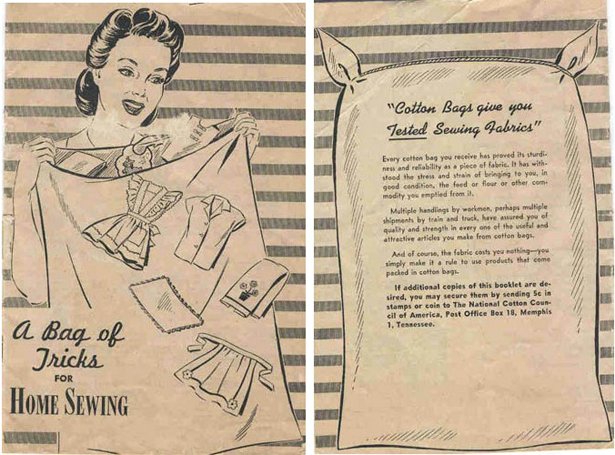
With the introduction of this new cloth into the home, thrifty women everywhere began to reuse the cloth for a variety of home uses – dish towels, diapers, and more. The bags began to become very popular for clothing items.
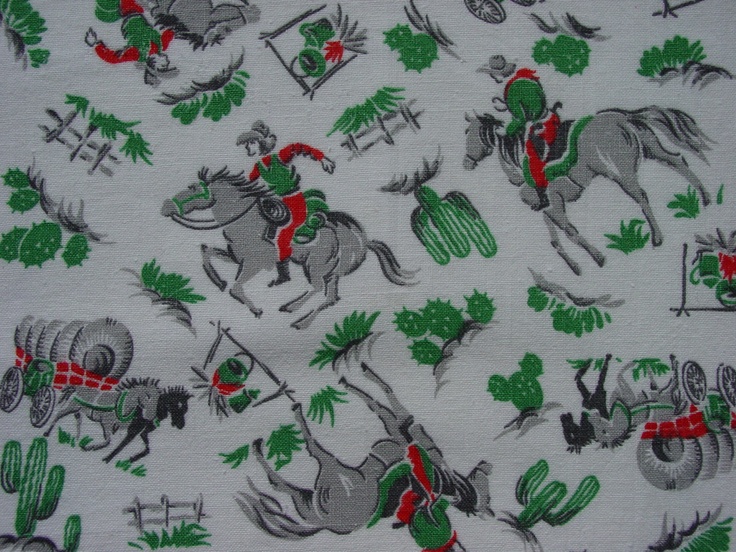
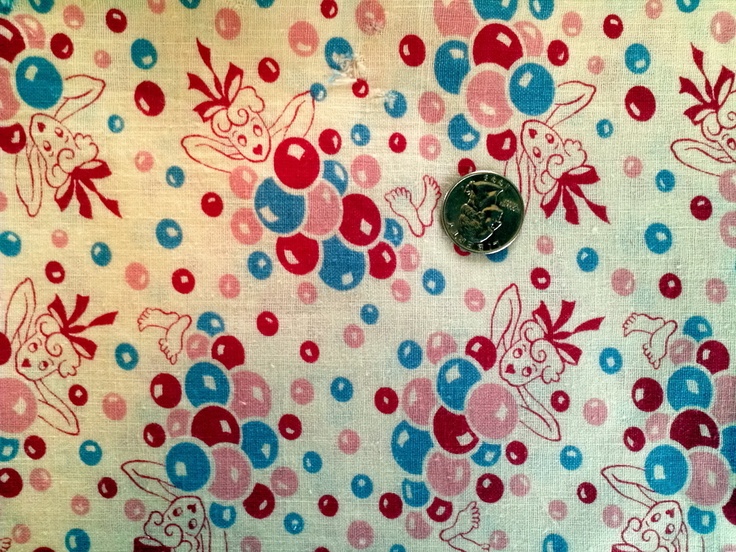
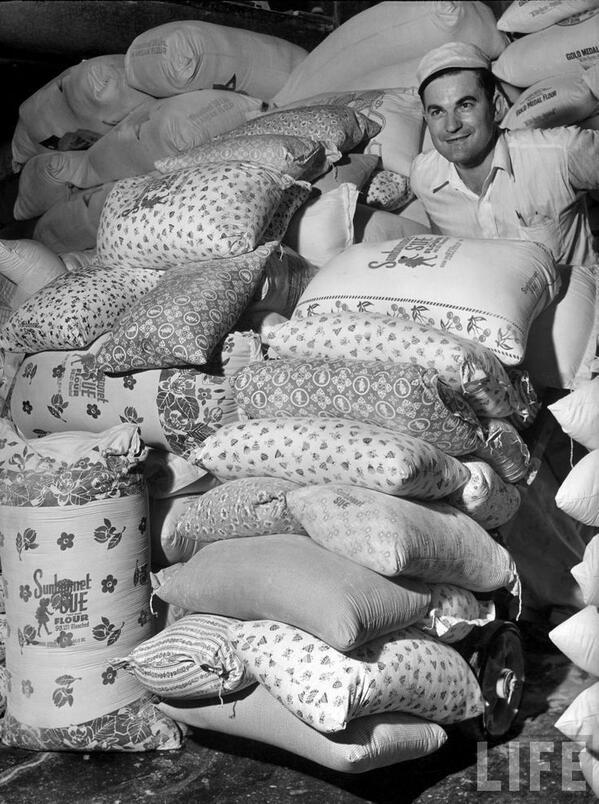 As the recycling trend looked like it was going to stay, the manufacturers began to print their cloth bags – or feedsacks – in an ever wider variety of patterns and colors.
Some of the patterns they started using are shown below
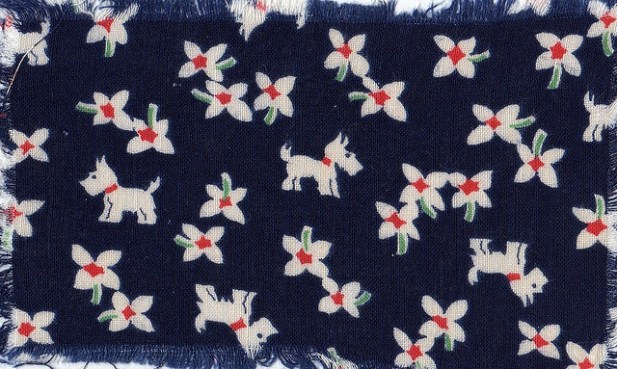
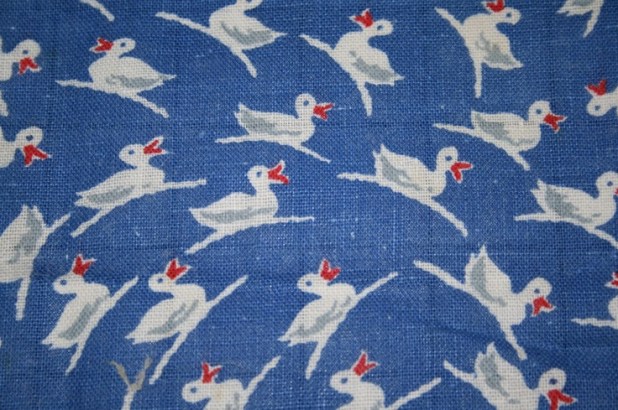
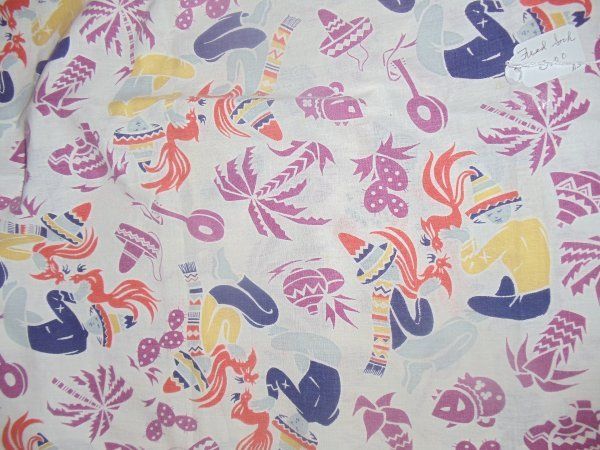 Over time, the popularity of the feedsack as clothing fabric increased beyond anyone’s wildest expectations, fueled by both ingenuity and scarcity.
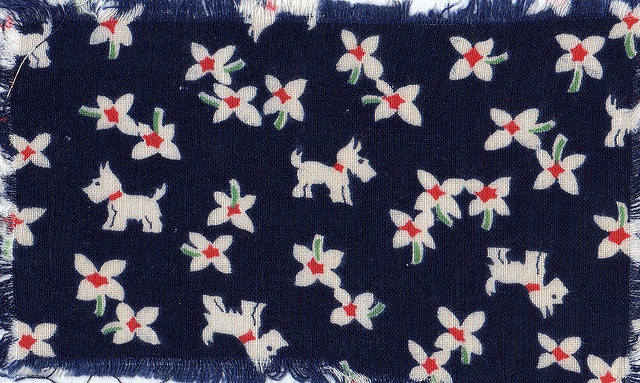
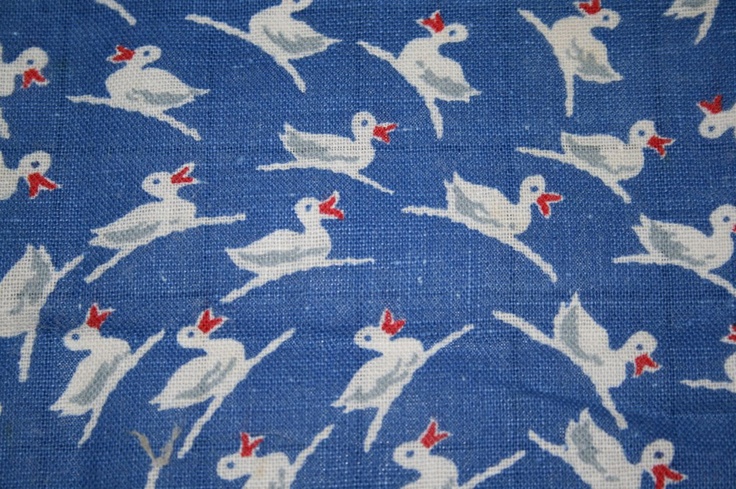
By the time WWII dominated the lives of Americans, and cloth for fabric was in short supply due to its use in the construction of uniforms, it was estimated that over three and a half million women and children were wearing garments created from feedsacks.
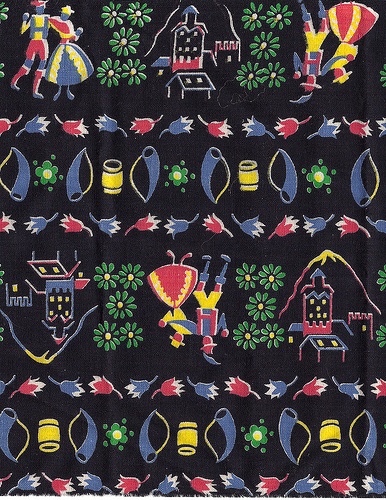 Images like these help to remind us that large swaths of the country were once so poor that making clothes for children, out of flour sacks, was simply a part of life in those times.
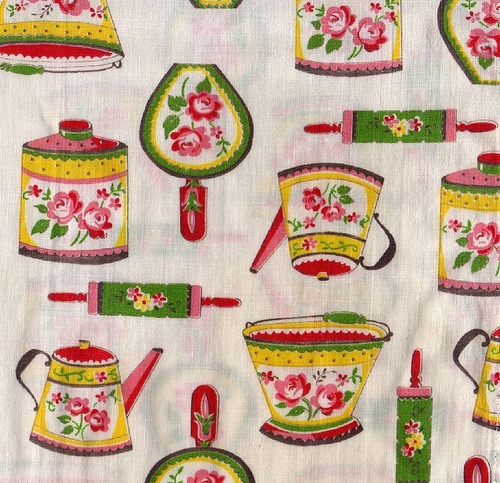
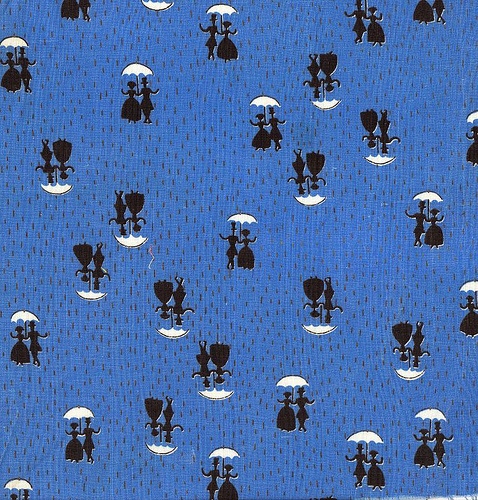
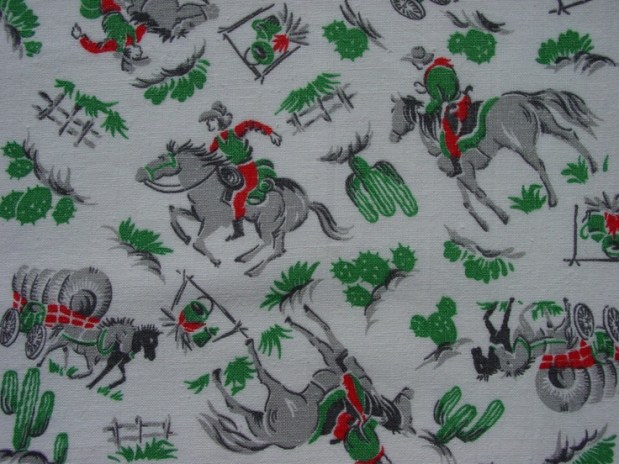
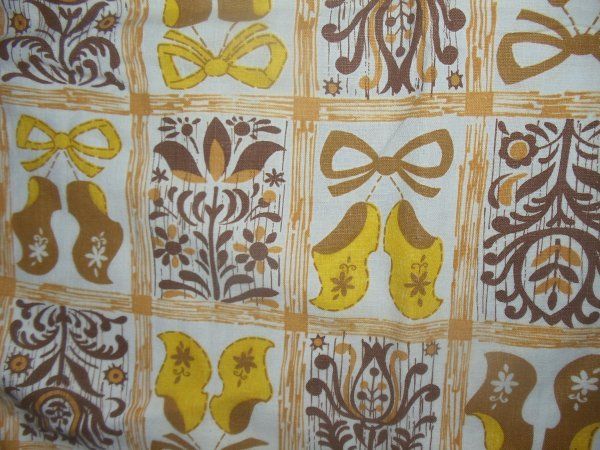
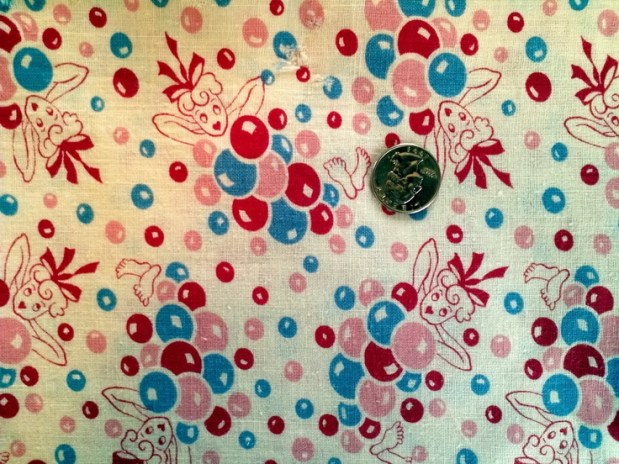
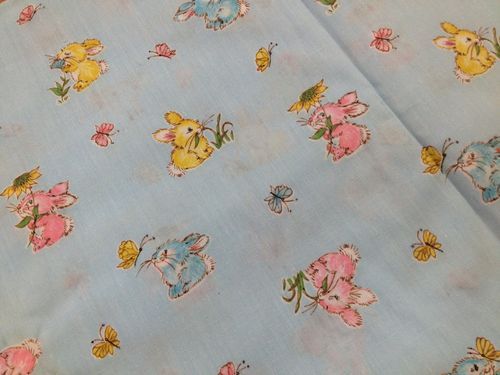
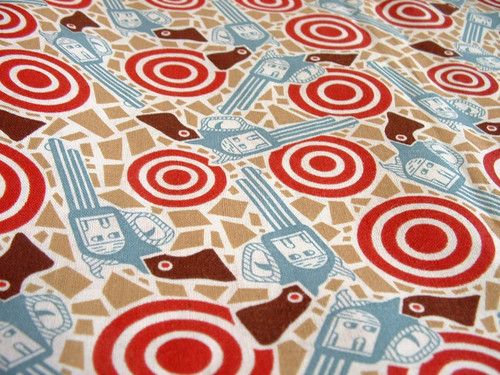
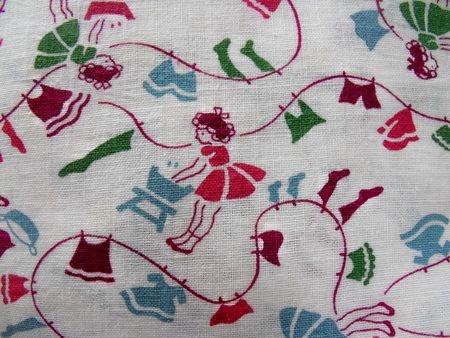
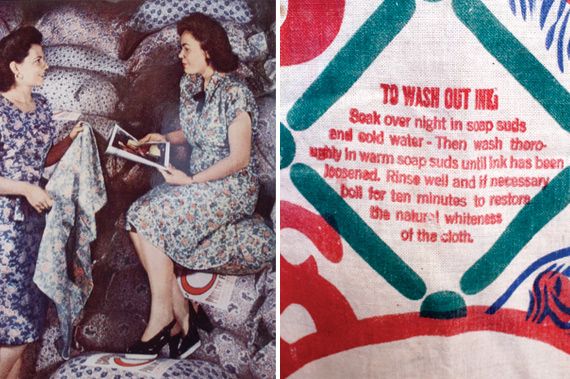
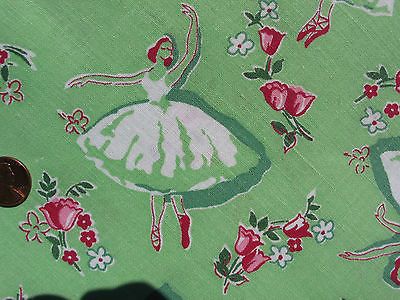 The manufacturers even gave instructions for how to remove the ink…
 Families shown below with their children wearing the Feed Sack dresses. People back then certainly knew how to try to use and reuse everything they had and not be wasteful.
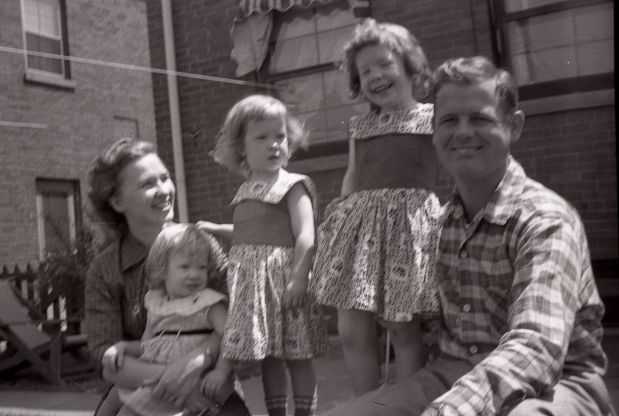
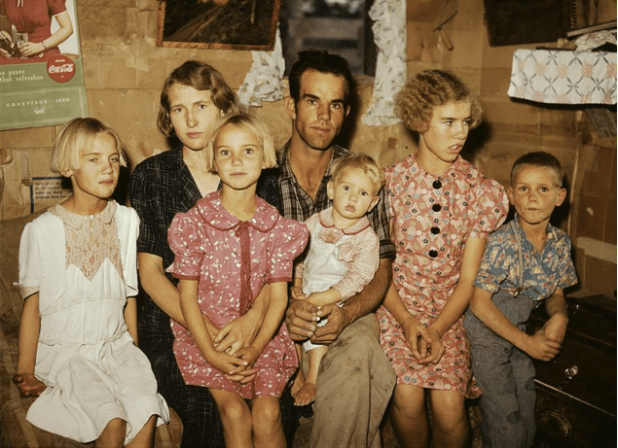
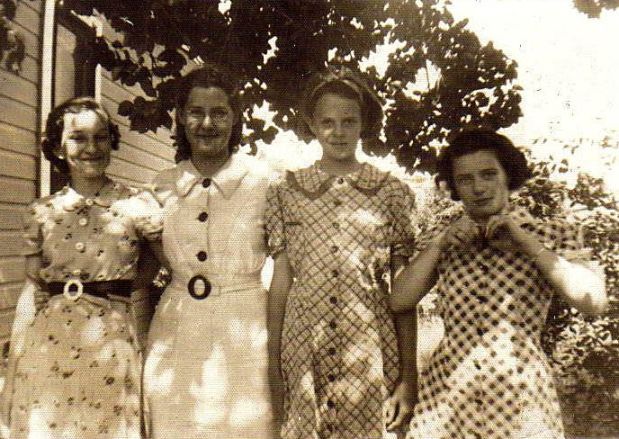 Feed sacks continued to grab the attention of women during the Depression and World War II. In the 1950s, though, cheaper paper sacks became available, and thus the gradual decline for these bright, beautiful and functional fabrics began.


The start of the 1960’s saw sack manufacturers trying to tempt customers back with cartoon-printed fabrics, from Buck Rogers to Cinderella. There was even a television advertising campaign intended to prick the conscience of the American housewife, but it failed to generate a significant upsurge in sales. Today it is only the Amish who still use cotton sacks for their dry goods.
The world has changed in so many ways since back then, yet having a mindset for making the best use of what you have available to you is a trait that, rightly, does and should carry on.

If you enjoyed this article, please do share it with your friends using the social media buttons below.
 Kindness Blog
These beautiful and useful flour sacks were still made in the 1950’s. The 4-hers in Central NY learned sewing techniques by making dresses from them. These dresses were presented in a fashion show at the NYS Fair. I had the privilege of modeling in those shows for 2 years. The dresses were very well crafted (hard to believe they were made by teens) and very comfortable because of the cotton content. But I understand that these flour sacks were only available in certain “farm” stores at that time.
LikeLiked by 1 person
Thanks for stopping by and following my blog. The fabrics are gorgeous as a sewer I will definitely follow them up.
LikeLiked by 2 people
ms lartalk I think it only fitting that I should tell you how important you as a seamstress are. A Sewer no mam but a fine seamstress
LikeLiked by 2 people
So glad you pointed that out. I had to laugh at the word ‘sewer,’ also. Very cute, though. And, I am a seamstress! I am almost positive my sister and I wore flower sack dresses. I lived on a small farm in rural Texas. I am in my 60’s. Wish I still had one of them.
LikeLiked by 1 person
This column reminds me of my own childhood, growing up in a Philadelphia neighborhood of recent Jewish immigrants after the Second World War. Every family said “yahrzeit” (year’s time) once a year for each family member no longer living. The candles were supposed to burn for 24 hours, so they came in a glass that could be reused for drinking. Every family had the same drinking glasses.
LikeLiked by 2 people
Oh, I’d forgotten the glasses and dishes. We had them, too. We also had Carnival Glass.
LikeLiked by 2 people
oh how I wish she were around to tell this story herself. My precious mother born in 1933, who spoke vividly of the depression, wore her share of flour sack dresses. I was amazed when rummaging thru a box of old sheets etc while doing my usual wkend yd sales; only to find two flour sacks. I knew right away what they were, and of course scooped them up as a keepsake of days gone by. To even look at them or touch them reminds me of stories my dear mother once told. I adored my mother and all her stories, sadly now I can only hear them in my heart.
LikeLiked by 3 people
Debbie Jenkins ~ What a wonderful treasure trove of stories you must have from your lovely mother! It’s sad when we suddenly realized the source of those stories has left us, and we are only left with our memories of them, and the stories they told.
But, having observed the effects of written history projects done by others of the memories they have of their own childhood, or that of a parent, grandparent, or other relatives, I have also learned how very important it is to get these wonderful historical tales and images recorded somewhere, somehow! Whether it is hand written, typewritten, typed into a computer file but most importantly PRINTED OUT as virtual documents such as those could easily be lost by a general upgrading in operating systems, a complete changeover in word processing file types, or a loss of data due to an irretrievably damaged hard drive.
They could also be verbally recorded on a disc of some kind, or a tape, a CD, even a thumb drive, or some other type of spoken word document, but the most important thing is that a hardcopy be created to preserve the information should the electronic version be irretrievably damaged at some point in the future.
But, if those stories are not recorded in some form or fashion, and they die with you, then future generations would have lost them permanently! And that would be the biggest shame of them all!
I hope you do undertake such a project soon, if you haven’t already, so that your children, or at least the children of other family members, will be able to learn from and pass these stories down to their children as well!
Best Regards,
Shari D.
LikeLike
My grandmother made flour sack dresses for my mom and aunt when they were small and until the teen years. As a child I would go and watch my grandma sew outfits for my sister and I. She got cotton material and used her Singer machine with her foot going a hundred mile a minute. I never got that talent down….We still have the machine that belonged first to my gggrandma.
LikeLiked by 1 person
My aunt used to make flour sack dresses for me in the late forties. Some of the patterns were quite nice and no one would know while others looked like flour sacks. We would be anxious to see the new designs and she would call my mother to tell her when she got them. I had 3 or 4 dresses made from them and was happy to get them. She also made aprons and blouses from them. Auntie Bea Saltus was a wonderful aunt…always caring about her niece.
LikeLiked by 3 people
Reblogged this on ammakenn and commented:
This is wonderful post from Kindness Blog made me stop and think about the resourcefulness and the beautiful spirit of the people of the time. Great read!
LikeLiked by 1 person
Reblogged this on and commented:
Caring should never be out of fashion, a lovely response from the Flour Mills, this shows that design can help people in their times of need and eliminate waste.
LikeLiked by 2 people
As a 4-Her in NC, clothing was my main project. My mother taught me to construct my clothes. One outfit was constructed from feed bags with a pink stripes on a white background similar to the fabric in the “A Bag of Tricks” ad. It was a two piece sleeveless bodice and an A-line skirt. I made it to compete in a National Cotton Council of America competition. I thought it was strange to use that fabric, but appreciate my mother’s teaching me about our heritage. The cowboy pattern on your blog reminded me that my mother used it to make clothing for my brother. I know this because she used it in quilt blocks for his quilt.
LikeLiked by 2 people
IS THE BEST
LikeLike
Reblogged this on Open Eyes = Opens Minds = Opportunity and commented:
History is the best teacher
LikeLiked by 1 person
This is so uplifting!
LikeLike
The photo of the family in their best clothes, in their cardboard-lined shack, broke my heart. The sheer technical skill and ingenuity of that woman making those clothes for her family in a time of obvious hardship is inspirational! That photo tells many stories. Where is it from?
LikeLiked by 3 people
The dresses are a marvel, aren’t they? And they waved the oldest girl’s hair for the photo. Good, smart people who refused to be beaten down. The best.
LikeLike
I wore skirts made of chicken fed sacks when I was in the eight grade. I sometimes merely opened both ends, hemmed one and ran elastic through a channel in the other side Then in Home Ec I learned how to make them look more like store bought, except I wasn’t good at doing so, Then our zoning changed and we had to get rid of the chickens so I no longer had the sacks to us for skirts.
LikeLiked by 1 person
What a fantastic blog post! I never really knew the history behind these dresses and now I do and it was a really good read. Great job, thanks for the 411!
Liz 🙂
LikeLike
Reblogged this on Sew Lyrically Vintage and commented:
How precious. I would LOVE to make a feedsack frock.
LikeLike
I wore four sack blouses. We had flour sack curtains in the kitchen until 1969. My mother than quilted te flour sack remnants after cutting them to make something. Nothing was wasted.
LikeLiked by 1 person
Love this article. My mother made dresses for me and my 4 sisters in which we wore them to church and school. She made quilts from the scraps and many other things also. Thank you for showing an art soon forgotten.
LikeLiked by 1 person
Hi! I am wondering if you have any information on the women in the top photo, such as names, date, location, etc. One of them could be my twin and I’m wondering if she’s somehow related to me! Thanks for the cool article!
LikeLike
I wore my share of flour sack dresses and so did all my girl friends. Sometimes we ran into a boy with his shirt matching our dresses. We thought it was “the cat’s pajamas”. Everything was rationed, sugar, gas and many other things. People made laundry soap out of used grease and lye. Those were the days where every body, and I mean EVERYBODY, was patriotic and willing to do whatever to help our servicemen have what they needed. This was during and after WWII when little was available and we “made do”.
LikeLiked by 2 people
Laura – I’m not quite sure which particular photo to which you are referring as the “top photo” BUT if it is the one with the four women standing side by side, which is the first “top picture” with ladies in it, I hope I have found you some good news!
Google has a way to locate images on the Internet, simply by having it do a search on one particular image. It will then locate all (or likely almost all) of the other places where this particular image has been posted by others! I did such a search, and just by randomly selecting certain results, DID FIND where all these women are identified by one of their relatives in a blog post! I don’t even remember at this point what it was that made this one stand out over the rest, but it is located here –
http://hubpages.com/education/feedsack.
And the part that identifies all the women says –
“Depression Era Clothing Made from Feedsacks
My 85 year old mom tells about wearing dresses made from feed sack material in the 1930s. People think that sounds terribly quaint, but it was quite common during the Great Depression.
People bought chicken feed or flour in large bags of 50 to 100 pounds. These bags, made of cotton, became popular for sewing projects when the feed sacks went from plain white material to flowered, checked and plaids.
The feedsack material was used to make dish towels, curtains, and quilts.
The photo shows my mom, Gail Lee Martin with her sister and two cousins. They’re wearing their feed sack dresses, made by their mothers. My mother is wearing a ribbon in her hair. Her sister Melba McGhee is in the light colored dress. (left to right) Twyla Yeager, Melba and Gail McGhee, and Lucile Vining.”
I do hope those are the ladies whose identity you are seeking! Please let me know, and if it’s not, and you need more information on how to do the Google search on images, I can help you check out the others!
Best Regards,
Shari D.
LikeLiked by 1 person
Laura – you asked about the women in the top photo. One of them is my mother, Gail Lee Martin, her sister Melba (McGhee) Harlan and 2 cousins. My mother’s memoir has some pages available for preview on Blurb and page 44 is where you’ll see this picture with the name of the cousins. http://www.blurb.com/books/989458-my-flint-hills-childhood
LikeLiked by 2 people
During the 1930’s, my family was so poor! We depended on both the chicken feed in the sacks… AND the sacks, ,… for my Mother’s and two sister’s dresses. Once, when I was about 8-10, and sent to the feed warehouse for more mash and corn, my Mother handed me 3 pieces of feed-bag cloth, saying, “I need for you to go all through the warehouse, until you find 2 more feed-bags, each, that match these patches. I need them to make our dresses for Easter Sunday”!
From the dress-scraps, my Mother cut-out pieces for various quilt patterns. I still have many of her beautiful quilts….and I still see, in the patterns, many of “my Mother’s and Sister’s special-occasion (Depression) dresses ….and I can still see them, too!… Beautiful..and how proud they wore them!
LikeLiked by 2 people
My mother used to talk about her feed sack clothing. I remember actually seeing some of the items her mother made and some she made as well. Thanks for sharing this history and reminding us all that reuse, recycle and reduce are kindnesses we should all practice. So pleased that you were able to stop by my blog recently and liked a post. Blessings!
LikeLiked by 2 people
So interesting! Love reading about this!
LikeLike
My grandmother would crawl up on the truck, when the chicken feed was delivered, and pick out just the right sack. Usually one or two to match the ones she already had. My cousin and I had matching dresses that she had made from the sacks Those were great days, I wish for them every now and again. But that was more than 65 years ago, and I still remember. And I’m grateful for those memories, they are wonderful.
LikeLiked by 2 people
The article cites the switch to paper bags as cause for demise of using feed bag material to make dresses. It was use of burlap bags that replaced nationswide use of colorful cotton feed bags, It was NOT paper bags.
LikeLiked by 1 person
I recall my Mother commenting several times about how her Mother made her and her sisters dresses from flour sacks. But I never realized that the flour manufacturers put out so many different patterns just for that purpose. Great article.
LikeLiked by 2 people
Yes, I remember these flour sacks, My grandma used them for under garments, and the sacks were used to bring in snow for washing dishes, baths ect.
LikeLiked by 1 person
This was fun information! I have a quilt my grandmother made out of flower sack cotton bags. It is still in great shape and I use it in our grandchildren’s room. Thank you for following my blog.
LikeLiked by 2 people
Reblogged this on Playing in the World Game and commented:
Beautifully crafted article demonstrating compassion and ingenuity in difficult times.
LikeLike
What year did they quit making cloth flour sacks?
LikeLike
I was raised by my dads parents, he was a single dad at a young age. My beloved nana made my sister and me panties and chamies from California Special , or Arena La Pena l 25 lb sacks of flour. we bought them from Mr. Toni who was Chinese and had a small store ; he would call my nana Momma and show her the sack he matched with her remelt. He spoke no Spanish and my nana spoke no Chinese but there was a great love from his family for us and we for them. They both had a disease in common rheumatoid arthritis , it was so bad that Mr. Toni and my grandmas hands were like claws from the illness. But they both understood each other! This was during the 50’s and the very early 60’s, my sister and I knew no different we were always clean and comfortable.
LikeLiked by 1 person
When I was a kid, any time I didn’t want to wear something, or some adult thought I wasn’t showing proper gratitude, I was told that “Little girls in the Depression had to wear flour sack dresses.” And I would imagine some girl in a burlap bag that said “Gold Medal” on it.
But as shown here, the fabric was actually soft woven cotton, and a lot of moms back then had time to hone their sewing to a fine art.
I got some flour sack dish towels from the Vermont Country Store recently, and the fabric is soft and breathable. It would be very comfortable to wear things made from it.
I love the photos you posted, I’ve never seen such quality pictures of the prints. I particularly like the lady in the bubble bath!
I don’t wish grinding poverty on anyone, I just think those flour sack dresses were pretty cool.
LikeLike
Reblogged this on Creativity and commented:
An interesting little tidbit of history
LikeLiked by 1 person
Thank you for sharing 🙂
LikeLiked by 1 person
An absolutely fascinating read: I see in the flour`sack fabric the poetry of the times . . . In our own time plastic packaging makes for very poor dresses! Thanks for this fine essay . . .
LikeLike
What an amazing article. Thank you for following my blog.
LikeLike
I have a quilt in a closet made entirely of flour sack fabric by my Grandmother in the 1930’s. There are a couple of different sections of it that are the exact same duck print (with the blue background) shown in the story.
LikeLike